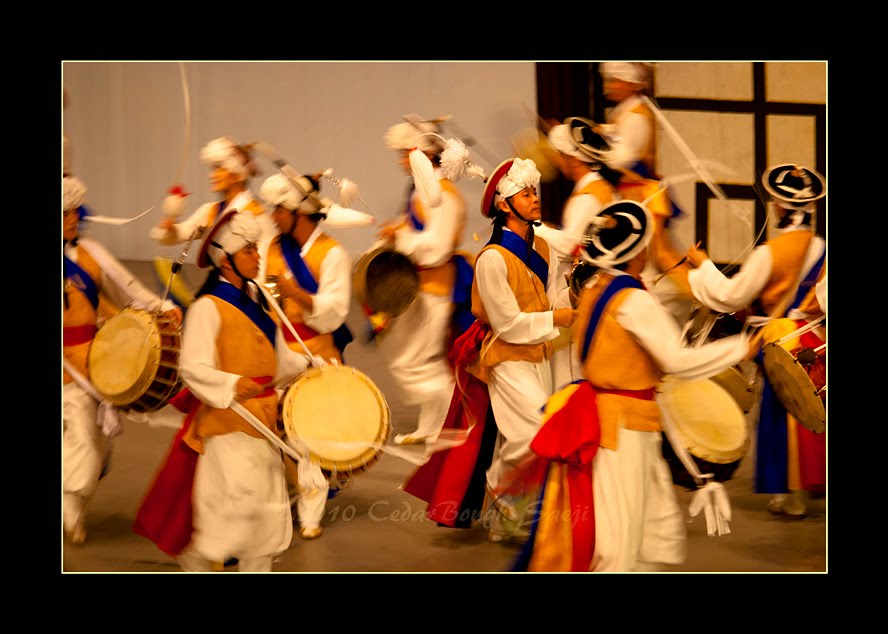
Showing posts with label samulnori. Show all posts

Monday, February 11, 2013

Society for Ethnomusicology, Northwest Chapter Annual Conference

I went to a conference over the weekend. I did not send in a proposal to present because of the two presentations I have March 1st and March 15th, but I went in hopes of academic stimulation.

I am so glad I decided to go. The conference was well organized and inspiring. The UW staff, faculty, and graduate students who organized the conference deserve accolades for their efforts to not only host the yearly event but also the way they seamlessly combined it with a celebration of 50 years of Ethnomusicology at the University of Washington.

On Friday evening the festivities began with a reception at Jack Straw Studios. When I arrived, I was immediately excited to see Professor Lee Byong-won of the University of Hawai'i, whom I had not expected to see as he was not presenting a paper (and indeed Hawai'i is part of the same chapter of SEM as UCLA). Moments later I noticed Katherine Lee, a scholar working at UC Davis whom I got to know at previous conferences. While I was talking with her Nathan Hesselink arrived. I was overjoyed to see him because Nathan was not on the program, although as a professor of Ethnomusicology in the Northwest Chapter I should have guessed he might attend. Nathan's research on Korean music is brilliant, but more than that he is always ready to give me solid advice via email, and I am quite indebted to him. I must admit I spent much of the reception talking with Nathan. If that had been the only thing to happen in the evening I would have been excited, but as I left the reception Robert Garfias was also leaving and we had a really sweet one-on-one discussion of Korean mask dance dramas and the job market-- the upshot was that he is giving me access to his marvelous archival footage of Bongsan Talchum and Yangju Byeolsandae from the 1960s. Just that was worth the drive to Seattle!

If I described the entire conference, you might get bored. But here are a few highlights.

- Katherine Lee was the only Koreanist presenting. Her paper discussed nation branding and the former brand image "Dynamic Korea." She demonstrated how Dynamic Korea was connected to the Dynamic music of samulnori and how this connection actually contributed to the change in slogan/brand image because the government remains nervous about the connection of drumming with protests.

- Sean Williams (Evergreen) managed to sing Kentucky murder ballads, Irish folk songs, and Javanese song from the Bandung area all during one highly engaging presentation explaining the value of having visiting artists in a program of ethnomusicology based on her own experiences at the UW as a graduate student (MA and Ph.D.) Yes, she sings very well.

- Robert Garfias (UCI) presented life lessons that I really needed to hear. The former UW professor extolled us to record everyone's stories, understand that things are not what they seem, don't allow others to discourage us, and much more. He also explained a lot of the history of Ethnomusicology along the way.

- The evening concert on Saturday night was two groupings of mbira ensembles and a marimba ensemble with the fastest hands I've ever seen. Although mbira always puts me to sleep, no matter how skilled or famous the players, the marimba had me dancing in my seat until we finally got up to dance in the aisle (which was not easy as it was a ramp and I was in heels).

A book honoring Garfias (as a young man on this cover)
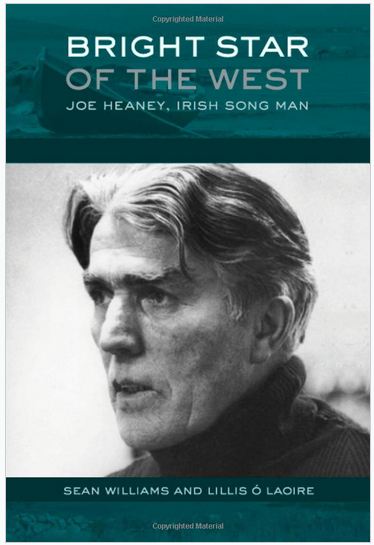
A book Sean wrote with her friend-- a writing process she discussed in her talk

Sunday, May 22, 2011

Friday, Saturday, Sunday

May 20th, 2011
I finally interviewed 이동현 Yi Donghyeon who manages the ongoing performances at Pungryu Theatre. It was a good interview, he didn't have much time but he answered questions very directly. Very useful information about how the theatre books, advertises and runs their shows.

In the evening I headed to 서강대 Sogang University for the 상모/사물놀이 sangmo/samulnori class. It was really awesome because 이종휘 Yi Jonghui my super excellent teacher allowed me to go straight into sangmo practice and keep concentrating on that all night. He also taught me this short snippet of 소고춤 sogochum. The idea is that with a proper sangmo routine and a short bit of sogochum I could actually do my own little show (5 minutes? 7 minutes?) after I get back to UCLA. While I did sangmo the rest of the class played samulnori (they actually got out all the instruments) and then in the last hour (we did 2.5 hours of class) I was joined by two others on sangmo.


May 21st, 2011
Did a ton of really good writing and went to see "Source Code" with Karjam.

May 22nd, 2011
Not that exciting of a day, sat with my best Korean male friend, 허창열 Heo Changyeol, who is totally one of the only people I can talk to honestly about my research and had a great talk. It could have been a little more thought-provoking if he'd disagreed with what I was saying or had a really different viewpoint, but mostly today I was saying stuff and he was making notes and agreeing. Even if I didn't get any huge new insights, I was able to confirm some ideas that I wanted to run past him and talk research.

Saturday, May 14, 2011

Songpa Sandae Noli Prepares to Perform

May 13th, 2011
I started the day with a list of about 7 items I wanted to take care of, but somehow it seemed that only two got taken care of because new tasks seemed to materialize like slugs after a nice rainfall. Everything I had to do seemed to take longer than it should have, too.

In the evening I had the second week of my new 사물놀이/상모 samulnori and sangmo class. I introduced my German friend Jan to the class, too. His first time to ever hold drums sticks, but he seemed to do fairly well. We did the drumming first, then for the last hour those of us who wanted to do sangmo (효진, 정환 and next week 선호 and this other woman who went to high school with 이종휘 are going to bring their sangmo, too). I managed to get both my 일사 motion and this other motion (the name of which is temporarily escaping me) up to a much more acceptable level. I now do 일사 with the 소고 sogo which is the difficult part of it for me. After class they all went to have a drink, of course I couldn't because of Karjam.

May 14th, 2011
Because the 송파산대놀이 전기공연 Songpa Sandae Noli Annual full length performance (the 38th year of full length performances, the 46th full length performance held during that time) is Sunday, Saturday was devoted to a full length rehearsal.  

At 서울놀이마당 Seoul Noli Madang we quickly moved outside to the madang itself to practice. Mats were set out for the musicians to sit on and we began from the first act: 상좌춤놀이 Sangjwachum Noli. Professor 이병옥 Yi Byeongok performed the first sangjwa part as people walking by were attracted by the music and sat down to watch the rehearsal. During the second act, Omjung, Meokjung Noli there were a couple moments where 함완식 and 안병인 took some movements over, but for the most part the acts continued exactly as they would be performed except for the fact that there were no costumes or masks. Some people were wearing 민복 minbok but not everyone- the musicians and few dancers were just wearing street clothes. I found it interesting that 이수환 continually took photographs during this rehearsal and no one told him to stop. I am sometimes forbidden from taking photos during rehearsals, and I am generally aware that I am not supposed to use any of them without permission. When I have brought other foreigners (including my mom) to the training center then 함완식 has strongly forbidden them (he would have less control over their photos than mine) from taking any at all.

As 함완식 speaks his lines, without the microphones of course, he seems to be using the force of his entire body to project the dialogue. I found watching Act 3 연닢눈끔재기놀이, which I have been concentrating on learning the most in class the most fun of all. Watching the entire expert cast do the scene was so different than before I had almost memorized the dialogue for the act. Audience members continued to come and go as we practiced with some people, especially those who were a little more elderly staying for long periods of time.

The "audience" of performers spends time discussing and gossiping with each other, says the lines quietly to themselves (especially the funny ones, the 불림 bullim and the short songs) at the same time as the performers, or rehearses lines they will need to speak in a few minutes when it is their turn to go on stage.

In the evening I went to the train station and met my good friend Kim who is having a flying visit to Korea. We had a great dinner and talk, then came home and she finally got to meet Karjam. 

Tuesday, May 10, 2011

Many Days of Scanty Fieldnotes

May 2nd, 2011
Monday I had 봉산탈춤 Bongsan Talchum of course, but before that I went to meet Hilary and Won Il, a well known creative-contemporary-traditional performer and a professor of composition at K-Arts. I've wanted to meet him for some time, partially just because he sounds interesting, but mostly because since Karjam wants to record he'd be the right guy to introduce a studio or engineers or whatever. And sure enough he had some great ideas. It was a very productive, if quick meeting. Bongsan Talchum class was still a little under-populated, but Kim Yongcheol, Sumi, Yeonshik, Byeongho were there and one other guy whose name has slipped my mind. I did mini-interviews with Yongcheol and Byeongho.

May 3rd, 2011
I had an amazing writing day, the first good days with several pages in weeks. In the evening I had 상모 sangmo with Hyeonseok and Yi Jonghui, of course. The latter took Hyeonseok and I out for dinner.

May 4th, 2011
I intended to watch the K-Arts students rehearse, but I couldn't go because they'd be doing stage blocking with various staff members and it would have been a hassle to get permission for me to be there and I didn't want to trouble them when they were already stressing about the performance.

May 5th, 2011
The K-Arts 봉산탈춤 Bongsan Talchum team had their performance. I met Sumi at the subway station and we went together. The performance was outside and it got pretty chilly before the end, but we were getting sunburned in the beginning. Putting the sun behind the perfect angle to watch the performance is so silly. They could have oriented so the sun was over one shoulder or other…

Wonjung did an excellent job as 취발이 Chuibali, in general the performance was grand with many exciting things to watch, but not –good- mask dance. Many of the performers had no sense for the flavor that should come through with the performance, and the sections with 풍물 pungmul drumming and the singing section were by far the best, as they were closer to the natural talents and interests of the majority of students.

May 6th, 2011
I had my first day of 사물놀이 samulnori class with 이종휘 Yi Jonghui. These classes will be at Sogang University, where 지용 Jiyong from 개전연 Gaejeonyeon is a student. When I arrived a few minutes before 8 there was a very strong 상모 sangmo vibe going on, and I had brought mine. We ended up doing sangmo until 9:30 then switching to 장구 janggu and 꽹과리ggwaenggwari until the end of class. I played janggu of course. 

Monday, April 11, 2011

A Club Practices Songpa Sandae Noli!

April 9th, 2011
Georgy came to Seoul. Otherwise, nothing interesting.


April 20th, 2011
I made pancakes for breakfast and then miraculously despite putting it off for weeks did our taxes. I hate giving the government taxes out of my fellowship money. It's just offensive. Seriously.

I went to 송파산대놀이 Songpa Sandae Noli class. Class was just 함완식 Ham Wanshik with no one to help him, but he did a great job. The older woman (53 but her skin looks maybe 35) who is a friend of 이수환 Yi Suhwan was there. Her name is 김은수 Kim Eunsu. The interesting thing was I started asking her about who she'd been practicing with. Apparently everyone would know this, but I didn't, 방송 통신대학교 which I am too lazy to look up but it's like Broadcasting Communications University, but it's a remote plan where you can learn without necessarily full attendance, or just evenings or weekends, or internet or whatever, has a club for Songpa Sandae Noli, or more specifically they have a club called 민속연구회 Folk (Culture) Research Group (they go by Minyeon 민연) that does Songpa, Samulnori, and Korean dance for example fan dance. They've been doing this since she says 77 or 78 and most of the participants aren’t good at Songpa but a few are very good, and they should come learn from the group sometimes, but they don't since some people are so good, and they perform and everything. She still practices with them every week. She said they might come except they're busy older people with families. 

For class we did Act 3 and Act 4 (before Aesadang enters the stage). It went pretty well. 어원석 Eo Wonseok and 함승헌 Ham Seungheon were both late, in Ham Jr's case very very late, so it was me, Eunsu, Ham's friend, and the two elementary school girls. 

Saturday, February 5, 2011

Three Days in Seoul

February 3rd, 2011
My friend Bonnie and her husband Curtis came and spent the night, so I made them dinner and we had a long Korean pop culture conversation. Otherwise I finished Photoshop on the photos from Goseong and transferred all the video to Karjam's computer and other book-keeping type tasks.

February 4th, 2011
I went to a concert at the 국악원 Gugakwon with Kimberely Hall in her capacity with the Asia Society, as the event photographer. However the seats weren't ideal for photography. Worse, though, was that the lighting in the hall was atrocious. The person I was particularly supposed to photograph, Jocelyn Clark, an American professor in Korea with amazing 가야금 gayageum skills, was lit with a spotlight straight down from above, so she had dark pits for eyes and her nose cast a shadow over her mouth—it's not pleasant for the audience to see a show lit like that, and definitely I was dissatisfied with the photos. When I met her after the show she said the lighting also made it difficult to see the strings. The rest of the show was moderately better lit, but none of it was very good.

The show itself consisted of six pieces of new music for Korean traditional instruments (usually). I have limited patience with such, in general, because for every good piece you hear quite a few bad ones. It is as if the musicians, composers, directors, etc. are all so bored with the traditional repertoire they're willing to try anything—but that doesn't mean it's good for the audience! The first piece was for five solo gayageum. No, that doesn't make sense. Why not just have one solo player do the whole thing? Why five? They alternated playing in a very unconventional way, taking the new techniques popularized by composers like 황병기 Hwang Byeonggi and then going way beyond into new territory. Chiefly, the piece was not melodic. I'm sure it must be beastly hard to play as nothing was predictable at all.

The second piece featured the 생황 saenghwang, an instrument that was described after the show by Kimberely American boyfriend Shawn as "you know, the bong," and indeed Hilary Finchum-Sung (who also attended with son Oliver), confirmed that it's filled with water. It was saenghwang, viola, cello and two violins. I honestly didn't feel that the music fell within the category of "Korean music" in any way at all, but I'm probably just being conservative. Honestly, to me, it sounded like the music to a movie montage about a person who was losing their mind and was committed to a mental hospital.


The third piece was one of the two I liked the most, it showed the promise of new compositions particulary through the interesting conversation between the 단소 danso and the 피리 piri and a lovely part where just the danso and아쟁 ajaeng were playing together.

The fourth and fifth piece were for full orchestra, the orchestra was seated in chairs (western), and wearing black and white (so western), with vaguely hanbok styling to the neckline, the women's outfits ended up looking more to me like Vietnamese clothes given that it was a slit skirt over pants. I have not much to say about either piece, they used some interesting additional instruments from western and other non-Korean areas, but the music itself didn’t captivate.


The sixth piece was in the broad genre of military music, powerful and aggressive with 나발 nabal horns, 태평소 taepyeongso and piri plus a lot of percussion. More than just the music, I enjoyed hearing the composer (who was also the conductor) talk a bit about his process before the piece began.


February 5th, 2011
I met Joji at the Electronics market and bought another voice recorder because the one I bought in August records at much too low of a volume to be useful. Even if the mic is practically in the mouth of whomever I'm interviewing. We then proceeded to the National Museum where we toured the Silk Road and Dunhuang exhibit.

At five "The Gwangdae" had a performance, the hall was crowded but 대천 Daecheon's wife helped us to find a seat. The show was fairly good.

사물놀이 samulnori, a singer, followed by 풍물 pungmul, followed by 이매 Imae from 하회별신굿탈놀이 Hahoi Byeolshin'gut Talnoli, followed by a lion's dance (the lion pretended to be a camel to great amusement), then a spinning disk performance and that was the it. The audience, especially the young children loved it. After the show I got to see everyone which was awesome. 가은 Gaeun also came to the show.

Still feel sick.

Thursday, September 23, 2010

Gyeongbok Palace and a Performance at the Gugakwon

September 23rd, 2010

Georgy came to Seoul and after some tea and snacks we headed out for a full day, all three of us in Korean modernized-peasant clothes, or 개량한복 Gaeryang Hanbok. I planned for us to hit the palace we’d chosen (경복궁 Gyeongbok Palace) and then go to the 한옥마울 Hanok Village on 남산 Namsan before the performances at the 국악원 Gukakwon (National Center for Korean Traditional Performing Arts), but we never made it to the second location. We first walked slowly through the new public space on 세종로 Sejong Road leading to 광화문 Gwanghwamun, the gate for Gyeongbok Palace. None of us had been there before and we looked closely at the timeline and Karjam took a lot of video footage of everything. The timeline of the 조선왕조 Joseon Dynasty (1392-1910) and current era is carved in stone blocks, with water running over them.


At last we got to the palace, the line to buy tickets was a million miles long, but since we were all in hanbok, of course we got in for free without waiting in line. Things continued to take forever as Karjam found lots of video-graphic interest. Georgy and I chatted and waited until we were all three very hungry, but when we got out of the palace I realized we were right by Aniko’s house and Georgy hadn’t seen her since the wedding, so we stopped in for a few minutes and some juice before meeting Scott, a former co-worker and his lovely wife, 은미Eunmi.

For me the entire holiday had been building up to the performance that evening at the Gugakwon, so I was pretty happy all day. Unfortunately we arrived only twenty minutes before the show and had less than perfect seats, but they were still free (so many traditional performances are free) and we were even given a survey (an example for me as I make mine!) and a hot slab of 떡 ddeok with our program! The show began with 양주별산대 Yangju Byeolsandae performing the same piece I’d seen at 서울놀이마당 Seoul Nolimadang. Next was 발탈Baltal, or foot-mask, a mixed comedy and puppet show. The two women who performed were very good, but the show relied on comprehension of their banter and singing, and Georgy’s brow was furrowed with the effort to keep up. I suspect much of the audience didn’t get all the jokes, but the Korean was not too colloquial/dialectical, so it was easier to understand than the mask dance drama had been. The rest of the evening included 사물놀이 samulnoli, 풍물 판 굿 pungmul, various acrobatic and trick shows, 줄타기 tight-rope, and so on. Overall the show was great, we were a tiny bit cold but snuggled together, the other audience members were having a great time, and we were in good company, still I found the set-up at the Gukakwon very divisive, the audience can’t interact with the performers (readily) and the barrier there is quite artificial (and modern), and I felt kept the energy level down from where it could have been. The stage is down in front of the audience (in tiered permanent step/bench seating) is above, but there is a wall between the audience and the first seats so that the eyes of the closest audience member are about 8 feet above the stage and at least 8 feet back (because of the walkway between stage and wall, and the walkway in front of the seats of the first row). There was some light on the audience, so the performers might have been able to see us, except that there were bright lights shining in their eyes to the degree that when they stopped to address the audience (it happened a couple times) they shaded their eyes with their hand.

There was no announcer and most of the show happened with out any introduction, although one dominant older performer did address the audience several times. The program had some information, but purely factual and standard, nothing engaging, deep or unusual.


Wednesday, August 11, 2010

Buying Traditional Music Equipment

August 11th, 2010


At last I have something research related to write about! Unfortunately (picture me kicking myself), no photos. After many firsts (first tea, first cooking, first laundry), I ended up heading to the wonderful street of excellent hanbok 한복 (Korean clothing) and gukak 국악 (traditional music) stores. The first store I went to, I’ve been there several times before, was highly disappointing. The only person there (I’m used to a woman who knows more than I do, if not a lot) was a man who had no idea how to play 장구 janggu. No one in a traditional music store should have no idea how to play janggu. It would be like a music instrument store in the US with a salesperson who could play neither guitar nor piano. I’m not saying he should have been proficient, but it was sort of ridiculous when I asked him why one janggu was 100,000 and the other 150,000. He claims not to know, I ask “is it just the color?” (One was finished with red stain that almost looked like lacquer, the other was just wood with clear finish). Hmmphhh. When I tried to ask him about 상모 sangmo he didn’t even seem to know how to assemble one.

I went down the street (to the store "전통 국악사"). 상호 (Sangho), the nice guy who was my salesperson there told me the different Janggu in front of me were made by three different companies, and came to them at a different price, so they charged differently for each. He then showed me how two were noticeably lighter- better if you’ll dance with the janggu. All three of those were blond wood. I chose one of the lighter ones, in his opinion the best looking one after I narrowed it down to the look the one company was producing. Then (and this is why I wish I’d taken my camera) he put the two heads onto the janggu and strung it while I watched. He broke one head and had to grab another, but it was really fascinating.

This is a video that I found a year or so ago, it’s a different guy in a different shop (Sangho told me each person does it a little different, and this was not the most traditional method because of the materials) but it’s close enough for you to get the idea). http://www.youtube.com/watch?v=Ie-eISQe_UQ

I also bought the sangmo (ribbon hat) I needed and two sogo 소고, one for Karjam and one for me (I have two in LA already, with my janggu, but they don’t do me any good there, and I used every bit of my luggage space). I bought the janggu and one sogo for Karjam to use in the short term, because next week having the janggu gives him the option of taking that class and even if he doesn’t do anything else, he can do the morning sogo dance practice. However, I plan to take janggu lessons for several months to improve my playing, so I’ll use this janggu myself, later. And I bought a pair of shoes for folk performing (미투리) and a 민복 (minbok) a white outfit worn under most other folk traditional performance clothing. I can use the shoes and the minbok for other stuff. Of course I have both already in LA.